
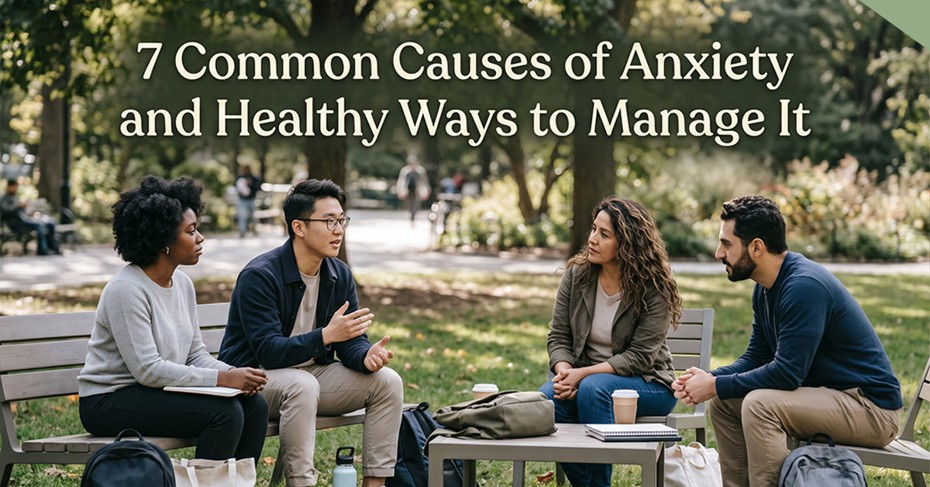
7 Common Causes of Anxiety and Healthy Ways to Manage It
Your heart pounds before a big meeting. Your mind races at 2 a.m. Your hands turn cold and sweaty for no clear reason. If this sounds familiar, you are not alone. Anxiety counseling in Newfield can help you make sense of these feelings and feel in control again.
In our years of working with clients, we have seen how confusing anxiety can feel. People often ask, “Why is this happening to me?” The honest answer is simple. Anxiety rarely comes from just one thing. Below, we walk you through seven common causes and healthy ways to manage them.
What Is Anxiety, Really?
Feeling nervous is normal. You may feel it before a job interview, a test, or a big decision. A little worry can even help. It keeps you alert and focused on staying safe. An anxiety disorder goes further. Your reactions feel out of proportion, hard to control, and they get in the way of daily life. You may feel dread, irritability, or trouble focusing. Your body may join in with a racing heart, tight muscles, sweating, or poor sleep.
Anxiety disorders are among the most common mental health conditions. Specific phobias affect up to 12% of people in the U.S., and social anxiety disorder affects about 7%. Women are also about twice as likely as men to have one.
7 Common Causes of Anxiety
Researchers do not know the exact cause of anxiety disorders. They believe a mix of factors plays a role. Here are seven common ones.
1. Genetics and Family History
Anxiety tends to run in families. If a parent or sibling has an anxiety disorder, your own risk goes up. This does not mean you will definitely develop one. It simply means your body may be more sensitive to worry. Knowing your family history can help you spot early signs.
2. Brain Chemistry
Your brain uses chemical messengers to manage mood. Serotonin, dopamine, norepinephrine, and GABA are a few of them. When these chemicals fall out of balance, anxiety can follow. Think of a thermostat stuck on high. Your body feels alarmed even when nothing is wrong.
3. A Very Active Fear Center
A small part of your brain called the amygdala helps manage fear. Studies show it becomes more active in people with anxiety disorders. In simple terms, your inner alarm system goes off too easily. This is not a weakness or a flaw in your character. It is biology at work.
4. Long-Lasting Stress
Severe or long-lasting stress can change the balance of your brain chemicals. A heavy workload, money worries, or caring for a sick loved one can wear you down over time. We often meet people who held it together for years until their body finally said enough. If this sounds like you, stress and anxiety counseling in Newfield can teach you tools to lighten the load.
5. Traumatic Events
A frightening or painful event can trigger anxiety. This might be an accident, a loss, or abuse. Your mind may stay on guard long after the danger has passed. Healing takes time, and you do not have to rush it. A trained counselor can help you move at a safe pace.
6. Physical Health Conditions
Sometimes the cause lives in the body. An overactive thyroid, called hyperthyroidism, can create symptoms that feel like anxiety. This is why doctors may run tests to rule out physical causes. A medical checkup is a smart first step. It gives you a clearer picture before you start treatment.
7. Caffeine and Daily Habits
Caffeine does not cause an anxiety disorder. It can, however, make physical symptoms feel worse. A third cup of coffee may leave you jittery, shaky, and more on edge. If you already feel anxious, small habits like this can add up fast.
Healthy Ways to Manage Anxiety
Once you know the causes, you can start building a plan. Here are six steps we often share with clients. You do not need to try them all at once. Start with one and build from there.
Step 1: Slow Your Breathing
Breathe in through your nose for four counts. Then breathe out gently for six counts. Repeat this for a few minutes. Slow breathing tells your body it is safe to relax.
Step 2: Move Your Body
Regular exercise supports your mental health. A 20-minute walk after dinner is a great place to start. Movement burns off tension and gives your mind a break from racing thoughts.
Step 3: Cut Back on Caffeine
Try swapping one cup of coffee for water or herbal tea. Notice how your body feels after a week. If you feel worried about your caffeine habits, talk with your healthcare provider.
Step 4: Practice Mindfulness
Mindfulness means paying attention to the present moment without judgment. Try five quiet minutes each morning. Focus on your breath, the sounds around you, or the feel of your feet on the floor. With practice, this can calm a busy mind.
Step 5: Lean on Other People
Support groups, in person or online, let you share your story and learn new coping skills. Talking with a trusted friend helps too. It also helps to teach your loved ones about anxiety so they know how to support you.
Step 6: Try Talk Therapy
Cognitive behavioral therapy, or CBT, is the most common talk therapy for anxiety. It helps you spot thought patterns and behaviors that fuel worry. Then you practice changing them. Exposure therapy is another option. It helps you face fears step by step in a safe setting. Some people also benefit from medication. Your healthcare provider can guide that choice. Please never change or stop a dose on your own.
When Is It Time to Get Help?
Reach out if worry gets in the way of work, sleep, or relationships. You should also reach out if physical symptoms show up often. Left untreated, anxiety can lead to problems like depression or substance use. The good news is treatment works. Getting help early can limit how much anxiety disrupts your life. If you ever have thoughts of harming yourself, call or text 988 right away.
Ready to Feel Calmer? Let’s Talk
We know how heavy constant worry can feel, and you do not have to carry it alone. At Healing Quest Counseling Services, we offer warm, practical anxiety counseling for people ready to feel steady again. Our team also provides stress and anxiety counseling in Newfield to help you build calm, lasting habits. Reach out today for a free matching call, and let us help you find the right counselor for your needs.
FAQ's
Can anxiety go away on its own?
Mild anxiety linked to a stressful event may fade once the stress passes. An anxiety disorder usually needs treatment. It is not a matter of willpower, so getting support early gives you the best chance to feel better.
What is the 3-3-3 rule for anxiety?
The 3-3-3 rule is a quick grounding tool. Name three things you see, name three sounds you hear, then move three parts of your body. It pulls your attention back to the present moment.
What does an anxiety attack feel like?
It can feel like a pounding heart, shortness of breath, sweating, shaking, or sudden dread. Symptoms often build fast. If you feel chest pain or are unsure, seek medical care right away.
Does talk therapy really help anxiety?
Yes. Talk therapy, especially CBT, helps you notice anxious thoughts and change how you respond to them. Treatment is effective, and many people feel better with the right plan and a counselor they trust.
Can you prevent an anxiety disorder?
There is no known way to prevent anxiety disorders. Still, you can lessen their impact. Seeking help when symptoms first appear can reduce how much anxiety disrupts your daily life.