
How Can Culturally Competent Therapy Support Black Men’s Mental Health?
For a long time, therapy did not feel like a safe space for many Black men. Old models often ignored race, culture, and the weight of daily discrimination. Black men’s mental health Counselling in Collingswood is changing that story. It builds trust first, then healing follows.
This shift matters because pain does not disappear just because it goes unspoken. Many Black men carry stress from racism, family pressure, and the myth that men must “just push through.” Culturally competent therapy meets that pain head-on, with respect and understanding.
In this guide, we will walk through what culturally competent therapy actually looks like. We will explain why it works, how it differs from traditional therapy, and what to expect if you decide to try it.
What Does Culturally Competent Therapy Actually Mean?
Culturally competent therapy means a therapist understands your background, not just your symptoms. It goes beyond politeness or good intentions. The therapist actively learns about your culture, your community, and the challenges tied to your identity. This kind of care does three things well. It names racism as a real source of stress, not a side issue.
It welcomes your beliefs and traditions into the treatment plan. It builds trust before it builds a diagnosis. Think of it like a doctor who asks about your daily life before writing a prescription. A culturally competent therapist wants the full picture. That picture includes your family, your history, and the world you move through every day.
Why Standard Therapy Often Falls Short for Black Men
Traditional therapy was built without much thought for Black men’s experiences. Many older models focus only on symptoms. They label people as “angry” or “resistant” without asking why those feelings showed up in the first place.
This approach can feel cold or even harmful. It treats stress like a personal flaw instead of a response to real pressure. For Black men who already face judgment in daily life, that kind of therapy can feel like more of the same.
A black male therapist in Collingswood can change that experience. Sharing a similar background often makes it easier to open up. There is less need to explain basic things, like what it feels like to be watched more closely in a store or judged unfairly at work.
The Power of Naming Racism as Trauma
Here is something many people miss. Trauma is not only caused by one big event. It can build slowly, through years of small but painful moments. Racism works exactly this way.
Culturally competent therapy treats racism as a real and ongoing source of trauma. This is often called racism-informed care. It means a therapist does not brush past comments about discrimination. Instead, they explore how those experiences shaped your stress, anger, or sadness.
This approach also asks something of the therapist. A racism-informed therapist reflects on their own blind spots too. They stay open to learning, rather than assuming they already understand your life.
Reclaiming Your Story Through Narrative Therapy
One powerful tool in culturally competent care is narrative therapy. This method helps you separate yourself from the problem. You are not “an angry person.” Anger is something that shows up, often for good reason.
Here is how it usually works, step by step.
- Tell your story your way: You share your experiences without a therapist rushing to label them.
- Externalize the problem: Instead of “I am broken,” you learn to say “this struggle is something I face.”
- Find moments of strength: Your therapist helps you spot times you pushed back or stayed strong.
- Re-author your story: Together, you build a new version of your story, one centered on resilience instead of shame.
This process matters because many Black men have absorbed negative messages from society for years. Narrative therapy offers a way to challenge those messages directly. It turns healing into an act of taking your story back.
Why Group Therapy and Healing Circles Work So Well
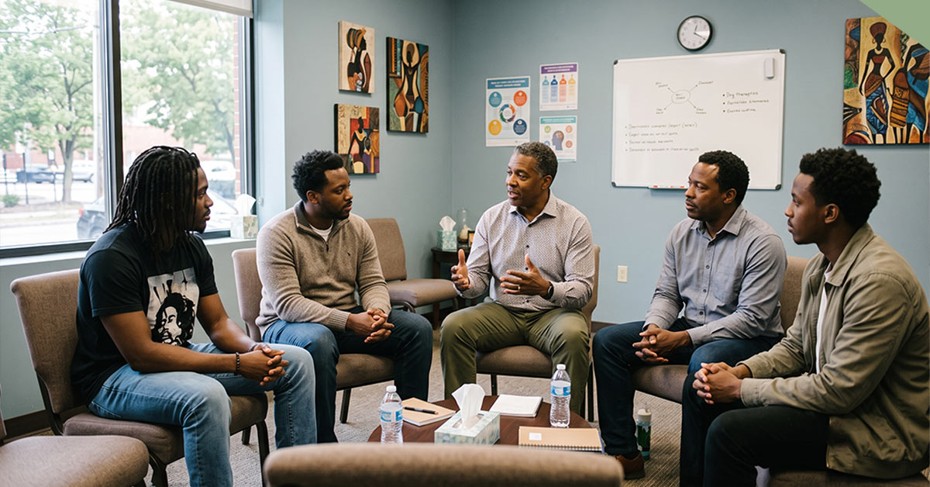
Therapy does not always have to happen one-on-one. Group therapy and healing circles bring men together to share what they are going through. There is real strength in knowing you are not the only one carrying this weight. These groups create a space where explanations are not needed. Other members already understand the pressure to “stay strong” or hide pain. That shared understanding lowers walls that individual therapy sometimes cannot reach alone.
Group settings also fight isolation. Isolation often makes stress worse, especially when cultural norms discourage men from talking about feelings. A circle of peers can turn silence into support, and shame into solidarity. For some men, a group is also a gentler starting point. It can feel less intimidating than sitting alone across from a therapist. Once trust builds in the group, many men feel ready to explore deeper, one-on-one work.
What to Expect From a Culturally Competent Therapy Session
Walking into your first session can feel uncertain, especially if past therapy did not go well. Culturally competent therapy usually starts differently. The focus is on listening first, not diagnosing right away.
A good therapist will ask about your background early on. This might include your family history, community, faith, or the pressures you face daily. These questions are not small talk. They shape the entire treatment plan around your real life.
You should also expect a focus on strengths, not just problems. Culturally competent therapy highlights your resilience. It asks what has helped you survive hard moments already, then builds new tools from that foundation.
Breaking the Stigma Around Seeking Help
Stigma keeps many Black men from ever walking through a therapist’s door. Cultural messages about masculinity often say strength means silence. Culturally competent therapy pushes back on that idea, gently and directly.
Seeking help is not weakness. It takes real courage to sit with painful feelings instead of pushing them down. A therapist trained in this approach understands that courage and treats it with respect.
Over time, more open conversations about mental health are chipping away at old stigma. Every man who tries therapy and finds it helpful becomes part of that shift. Healing becomes something communities build together, not something faced alone.
Ready to Start Your Own Healing Journey?
If any part of this resonated with you, we want you to know that reaching out is not a sign of weakness. It is one of the strongest steps you can take. You deserve a space where your full story is heard, not just your symptoms.
At Healing Quest Counselling, we offer therapy built around real listening and genuine cultural understanding, right here in Collingswood, NJ. Our team is ready to walk with you, at your pace, toward real healing. Book a matching call today and take that first step toward the support you deserve.
FAQs
What is culturally competent therapy?
It is therapy where the counselor understands your race, culture, and lived experience. This helps build trust and makes treatment feel more personal and respectful.
Why is a Black male therapist helpful for Black men?
Shared background often reduces the need to explain everyday experiences. This can build trust faster and make sessions feel safer and more relatable.
Does therapy actually help with racism-related stress?
Yes. Racism-informed therapy names racism as real trauma. Naming the source of stress helps you process it instead of carrying it silently.
Is group therapy as effective as one-on-one sessions?
Group therapy offers unique benefits, like reduced isolation and shared understanding. Many men use it alongside individual sessions for deeper support.
How do I know if therapy is right for me?
If stress, sadness, or anger feel hard to manage alone, therapy can help. A first session is a low-pressure way to see if it fits your needs.