
What Happens in Couples Therapy? A Step-by-Step Look at Sessions in Collingswood
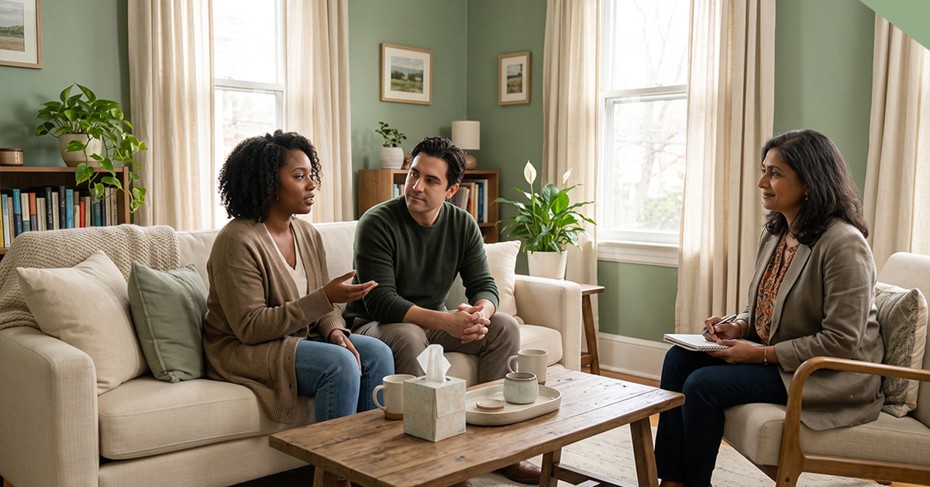
Picture sitting in a quiet room with your partner, unsure what comes next. Will someone take sides? Will you have to share everything on day one? These worries are normal. Most couples feel nervous before their first visit. In our years of practice, we have walked with many partners through this exact moment. This guide explains each step in plain words. If you are thinking about couples counseling in Collingswood, NJ, you will know what to expect by the end.
What Couples Therapy Really Is
Couples therapy is guided talk time for two people. A trained counselor helps you understand each other better. The goal is not to decide who is right. The goal is to help you work as a team again. Think of your counselor as a coach for your relationship. A coach does not play the game for you. Instead, a coach teaches skills, spots unhelpful habits, and points out what already works.
Some counselors use research-based methods, such as the Gottman Method, which grew from decades of study on couples. Others blend several approaches. Either way, good therapy is structured, kind, and built around your goals.
What Happens in Couples Therapy, Step by Step
Every counselor works a little differently. Still, most couples move through the same basic stages.
Step 1: The First Session
Your first visit is mostly about getting to know you. Both partners usually attend together. We ask what brought you in and what you hope will change. We also ask about your story, including the good parts, because a strong bond often sits beneath the stress. This session is also a trial run. You get a feel for the counselor’s style. If the fit seems off, it is okay to say so. A good match matters more than speed.
Step 2: Sharing Your Own View
Some counselors meet with each partner alone for one session. This gives you space to share your side without worrying about your partner’s reaction. You can talk about family background, past hurts, or topics that feel hard to say out loud together.
Not every counselor works this way, so ask about it early. Also ask how your counselor handles private information shared in solo sessions. A clear answer is a sign of a careful professional.
Step 3: Short Questionnaires
Some counselors use questionnaires to see the full picture. They often cover communication, trust, and shared goals. The Gottman Relationship Checkup is one example. It is an online tool, and it takes about an hour to finish. The results show your strengths and trouble spots. That gives your counselor real information to work from instead of guesses.
Step 4: Building a Plan
Next, we share what we have noticed. We start with your strengths, because every couple has some. Then we name the patterns causing pain, such as constant arguments or feeling distant. Together, we set simple goals and agree on a plan. By the end of this step, you should know what comes next and why.
What Sessions Look Like After the Start
Sessions often last about an hour. Couples usually meet weekly at first, then less often as things improve. Schedules vary, so your counselor will guide you.
Learning New Ways to Talk
Most arguments are not about the dishes or the budget. They are about feeling unheard. So we teach simple speaking and listening skills. Here is a real-world example. Instead of saying, “You never help around here,” try this: “I feel stressed when the dishes pile up. Can we share them?” The second version invites teamwork. It does not start a fight.
Handling Conflict Without the Blowup
Heated moments are normal. What matters is how you handle them. We teach couples to spot early warning signs, like raised voices or shutting down. When emotions run high, a short break helps. Taking at least 20 minutes lets your body calm down. Then you can return to the talk with a clearer head.
Practicing at Home
Real change happens between sessions. Your counselor may suggest small tasks. Examples include a five-minute daily check-in or a weekly date night. These habits keep your connection strong when life gets busy.
Ground Rules for a Safe Space
Most counselors set a few basic rules at the start:
- Take turns speaking: Each partner gets time to share without being interrupted.
- Keep sessions private: What is said in the room stays there, which builds trust.
- Be honest and open: Real progress needs real talk, even when it feels uncomfortable.
- Show up consistently: Regular attendance helps new skills stick.
One important note: couples therapy is not the right fit when there is abuse or violence. A caring counselor will talk with you about safer options first.
Who Can Benefit From Couples Therapy
You do not need to be in crisis to start. Couples come in for many reasons. Some want better communication. Others are rebuilding trust after a betrayal. Some are dealing with money stress, parenting differences, or a big life change. Think of it like a car tune-up. Small repairs early can prevent larger problems later. Waiting until everything breaks down makes the work harder.
How to Prepare for Your First Visit
A little preparation makes the first session smoother. Here are four easy steps:
- Talk about your goals: Ask each other what you hope to gain. Even a short chat helps you start on the same page.
- Come with an open mind: You may hear new things about your partner. Try to listen first and respond second.
- Check the practical details: Find out if sessions are in person or online, and how long they last.
- Ask about cost and insurance: Fees and coverage differ from one practice to the next. Knowing upfront removes stress later.
When you search for a couples counselor in Collingswood, ask about training and approach too. A good counselor will welcome those questions.
Ready to Take the First Step Together?
Reaching out is often the hardest part. We know it takes courage to walk in the door. You do not need the perfect words or a flawless plan. You only need a willingness to try. At Healing Quest Counseling Services, we offer couples counseling with in-person visits and virtual sessions across New Jersey. As your couples counselor in Collingswood, we will listen first, match you with the right therapist, and build a plan around your life. Book a matching call today, and let’s start this next chapter together.
FAQ's
How long does couples therapy take to work?
It depends on your goals. Some couples notice progress within a few weeks. Others need several months. Attending regularly and practicing new skills at home usually speeds up results.
Is couples therapy worth it?
For most couples, yes, when both partners take part. Research supports several approaches, including the Gottman Method and emotionally focused therapy. Results depend on effort, fit, and timing.
Can couples therapy save a marriage?
It can help, especially when both partners want change. A counselor cannot force an outcome. Therapy gives you tools and honest conversations so you can choose the best path together.
Do both partners have to attend couples therapy?
Most sessions include both partners. Still, one partner can begin alone if the other is not ready yet. Joint sessions work best for relationship goals.
Is couples therapy only for married couples?
No. Dating, engaged, and long-term partners can all join. Any pair who wants stronger communication or deeper trust can benefit.