
The Benefits of Therapy for Managing Anxiety and Depression
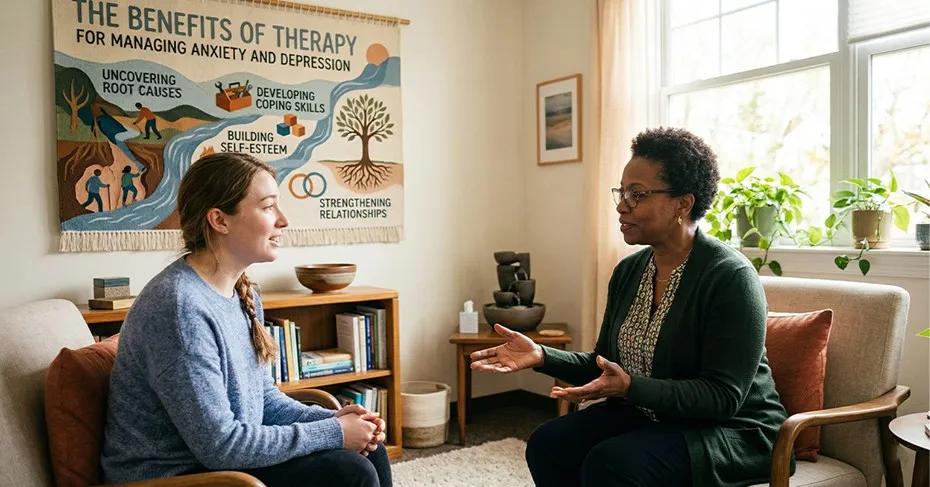
We often see people push through stress without realizing how heavy it has become. In the first 100 words, it is important to say this clearly: anxiety support and stress relief therapy are not just options; they are practical ways to feel better and regain control.
Anxiety and depression can show up in simple ways. You may feel tired all the time. You may overthink small things. Some days, even basic tasks feel hard. We have worked with people in this situation, and one thing is clear. When left untreated, these feelings do not just go away on their own.
Therapy gives you a structured way to understand what is happening and what to do next.
Why Is Therapy Helpful for Anxiety and Depression?
Therapy does more than help you talk about your feelings. It helps you understand why those feelings exist in the first place. Here is what we have seen in real situations:
- People learn what triggers their anxiety or low mood
- They understand how their thoughts affect their emotions
- They build better ways to respond to stress
- They feel less alone because someone listens without judgment
Over time, therapy helps you stop reacting on autopilot. Instead, you begin to respond with awareness and control. This is where stress relief therapy plays a key role. It helps reduce the intensity of daily pressure while building long-term habits that support mental health.
How Does Therapy Actually Work Step by Step?
Most people feel unsure about what happens in therapy. Let’s break it down in simple steps.
Step 1: Understanding Your Thoughts
In early sessions, we focus on identifying patterns. For example, someone may think, “I always mess things up.” That thought creates anxiety or sadness. Therapy helps you notice these patterns clearly.
Step 2: Challenging Negative Thinking
Once we spot the thought, we question it.
- Is it always true?
- What proof supports it?
- What proof goes against it?
This step helps you see things in a more balanced way. It is not about forced positivity. It is about realistic thinking.
Step 3: Learning Coping Skills
You also learn practical tools such as:
- Deep breathing
- Grounding exercises
- Simple routines to calm your mind
These tools are part of anxiety support that you can use daily, not just in sessions.
Step 4: Practicing in Real Life
Therapy is not limited to the session. You apply these tools in daily life. For example, if social anxiety is an issue, you may start with small interactions and slowly build confidence. This gradual approach makes change feel possible and safe.
What Is CBT, and Why Is It Commonly Used?
Cognitive Behavioral Therapy, often called CBT, is one of the most used approaches for anxiety and depression. It works on a simple idea. Your thoughts affect your feelings, and your feelings affect your actions. Here is a simple example:
- Situation: You are invited to a gathering
- Thought: “I will embarrass myself.”
- Feeling: Anxiety
- Action: You avoid going
CBT helps you change the thought so the outcome changes.
- New thought: “I may feel nervous, but I can handle it.”
- New feeling: Less anxiety
- New action: You attend and try
This shift may seem small, but it creates real change over time.
What Is Exposure Therapy, and How Does It Help?
Avoiding fear feels safe in the moment. But over time, it makes anxiety stronger. Exposure therapy works by helping you face fears slowly and safely. For example, if someone fears public speaking:
- Start by speaking in front of a mirror
- Then talk to a close friend
- Later, speak in a small group
Each step builds confidence. This method reduces fear because your brain learns that the situation is not dangerous. This is another form of stress relief therapy that works by reducing avoidance behavior.
Can Therapy Also Help With Physical Symptoms of Stress?
Yes, and this is often overlooked. Anxiety and depression are not just mental. They affect the body too. You may notice:
- Headaches
- Muscle tension
- Poor sleep
- Fast heartbeat
Therapy teaches relaxation techniques that calm both the mind and body. Some helpful methods include:
- Breathing exercises
- Mindfulness practices
- Light physical activity
When practiced regularly, these methods improve overall well-being.
Is Online Therapy as Effective as In-Person Sessions?
Many people ask this question. Online therapy can be effective, especially for those who feel more comfortable at home. It saves travel time and offers flexibility. However, in-person sessions allow a better connection through body language and facial expressions. This can help build trust faster. The right choice depends on your comfort level and needs. Both options can provide strong anxiety support when done consistently.
How Long Does Therapy Usually Take to Show Results?
This depends on the person and the situation. Some people notice small changes within a few weeks. Others may take longer. Many structured therapies show progress within 8 to 10 sessions. It is important to stay consistent. Therapy is not a quick fix. It is a process that builds lasting change.
What Can You Do to Support Therapy Outside Sessions?
Therapy works best when supported by daily habits. Here are simple ways to help yourself:
- Stay active with light exercise
- Maintain regular sleep patterns
- Talk to trusted people
- Limit caffeine if it increases anxiety
- Take breaks when needed
These habits strengthen the effects of stress relief therapy and help you stay balanced.
How Do You Know if Therapy Is Right for You?
You do not need a severe condition to start therapy. You may benefit if:
- You feel overwhelmed often
- You struggle to manage stress
- Your mood affects daily life
- You avoid situations due to fear
Starting early can prevent things from getting worse.
FAQs
Q1) What type of therapy is best for anxiety?
Cognitive Behavioral Therapy is widely used. It helps change negative thought patterns and build coping skills that reduce anxiety over time.
Q2) How long does therapy take to work?
Many people see improvement within 8 to 10 sessions, but it depends on personal needs and consistency.
Q3) Can therapy cure depression completely?
Therapy helps manage symptoms and improve daily life. Some people recover fully, while others learn long-term ways to stay balanced.
Q4) Is therapy better than medication?
Therapy addresses root causes, while medication manages symptoms. Many people benefit from a combination of both.
Q5) What should I expect in my first session?
You will talk about your concerns, history, and goals. It is a safe space to share without judgment.
Ready to Feel Better? Start Your Journey with the Right Support
Taking the first step can feel hard, but it matters. We have seen how the right guidance can change daily life in simple but meaningful ways. At Healing Quest Counseling, we focus on real, practical anxiety support and stress relief therapy that fits your life. If you are ready to feel more in control and less overwhelmed, we are here to help you move forward with clarity and confidence.