
How to Know If Individual Counseling Is Right for You?
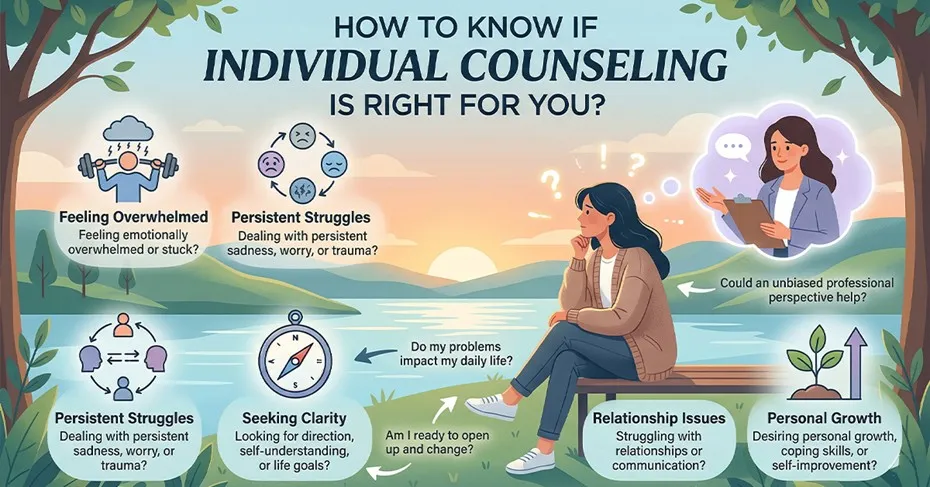
We Often Think Therapy Is Only for Serious Problems
That is not true. Many people look for individual counseling near you to handle stress, improve habits, or understand themselves better.
Life can feel heavy at times. Work pressure builds up. Relationships get tense. Thoughts feel hard to manage. In those moments, having a safe space to talk can make a real difference. We have seen that therapy works best when people start early. You do not need to wait for things to get worse. You can seek help when something simply feels off.
What Does Individual Counseling Actually Involve?
Individual counseling is a one-on-one conversation with a trained therapist. It is private, focused, and built around your needs. You talk about your thoughts, feelings, and challenges. The therapist listens and helps you make sense of things. Over time, you learn better ways to cope, respond, and move forward.
Here is what usually happens:
- You share what is on your mind at your own pace
- The therapist asks simple, thoughtful questions
- You learn tools to manage stress, thoughts, and emotions
- You set small, clear goals for progress
It is not about being judged. It is about being understood.
How Do You Know if Therapy Might Help You?
You may not always have a clear answer. But some signs suggest therapy could be useful.
Are You Feeling Overwhelmed Most Days?
Daily tasks should feel manageable. If they feel heavy, something deeper may be going on. You may feel tired, distracted, or unable to focus. Even small tasks can feel like too much. Therapy helps break this cycle into smaller, doable steps.
Do You Keep Having the Same Negative Thoughts?
Negative thoughts can repeat without warning. You may question your worth or expect the worst. This pattern can affect your mood and choices. In therapy, you learn to spot these thoughts and change how you respond to them.
Are Your Emotions Hard to Manage?
Strong emotions can feel confusing. You may feel angry, sad, or numb without clear reasons. At times, reactions may feel bigger than the situation. Therapy helps you understand these feelings and respond in a calm way.
Are Your Relationships Feeling Strained?
Relationships need effort and clear communication. If you often feel misunderstood, it can lead to distance. You may notice more arguments or silence. Therapy helps you understand patterns and improve how you connect with others.
Have You Gone Through a Major Life Change?
Life changes can shake your sense of stability. This includes moving, job loss, breakups, or losing someone. Even positive changes can feel stressful. Therapy gives you space to process and adjust at your own pace.
Are You Using Unhealthy Ways to Cope?
We all cope in different ways. But some habits may not help in the long run. You might rely on food, work, or screens to escape feelings. Therapy helps you replace these with healthier choices.
Do You Feel Lost or Unsure About Your Direction?
Sometimes, nothing feels clearly wrong. Yet, something feels missing. You may feel stuck or unsure about your goals. Therapy helps you reconnect with what matters to you.
Are You Avoiding Situations Due to Fear?
Avoidance often comes from anxiety. You may skip events, conversations, or tasks. This can limit your growth over time. Therapy helps you face fears slowly and safely.
Have You Experienced Trauma?
Past experiences can affect your present. Even if they happened long ago, the impact can stay. You may notice triggers, fear, or emotional reactions. Therapy helps you process these experiences in a safe way.
Do You Simply Want to Understand Yourself Better?
Not everyone comes to therapy because of a problem. Many come to grow. You may want to improve habits, build confidence, or make better decisions. Therapy can support all of that.
What Are the Benefits of Choosing Individual Counseling?
The benefits often show up slowly, but they are meaningful. Here is what many people notice over time:
- Better understanding of thoughts and feelings
- Improved stress and emotion management
- Stronger communication in relationships
- Clearer goals and decision-making
- Healthier coping habits
These changes may seem small at first. But they add up over time.
How Do You Choose the Right Therapist?
Finding the right therapist matters. Comfort and trust are key. Here are simple steps to follow:
Look for the Right Fit
Check their experience and approach. Make sure it matches your needs.
Ask Questions Early
It is okay to ask about their methods, session style, and expectations.
Notice How You Feel
After the first session, ask yourself if you felt heard and respected.
Take Your Time
You do not need to decide right away. Finding the right match is part of the process.
What Should You Expect in Your First Session?
The first session is more about understanding than solving everything. You may talk about:
- Why are you seeking therapy
- Your current challenges
- Your goals for counseling
The therapist may guide the conversation gently. There is no pressure to share everything at once.
How Long Does Individual Counseling Take to Work?
This depends on your goals and situation. Some people notice changes in a few sessions. Others take more time. Progress is not always fast. But it is steady when you stay consistent. Think of therapy as a process, not a quick fix.
When Is the Right Time to Start?
There is no perfect moment. If you are asking this question, it may already be a sign. You do not need a crisis to begin. You can start when you want things to feel better, clearer, or more balanced.
FAQs
Q1) How do I know if I need individual counseling?
If stress, emotions, or thoughts feel hard to manage, counseling may help. You do not need a crisis. Even small struggles are valid reasons to seek support.
Q2) What issues can individual counseling help with?
It can help with anxiety, stress, relationships, life changes, and self-growth. It also supports better habits and emotional awareness.
Q3) How often should I attend therapy sessions?
Most people start with weekly sessions. Over time, sessions may reduce based on progress and comfort level.
Q4) Is individual counseling effective?
Yes, many people see real improvements over time. It helps you understand patterns and build healthier ways to cope and respond.
Q5) Can I stop therapy anytime?
Yes, you are in control of your therapy journey. You can pause or stop when you feel ready.
Ready to Take the First Step Toward Feeling Better?
If you see yourself in any of these signs, it may be time to act. We believe starting is often the hardest but most important step. At Healing Quest Counseling, we offer supportive, simple, and personalized individual counseling that meets you where you are. If you are searching for individual counseling near you, we are here to help you feel heard, understood, and more in control of your life.