
How Does Individual Therapy Help with Trauma Recovery?
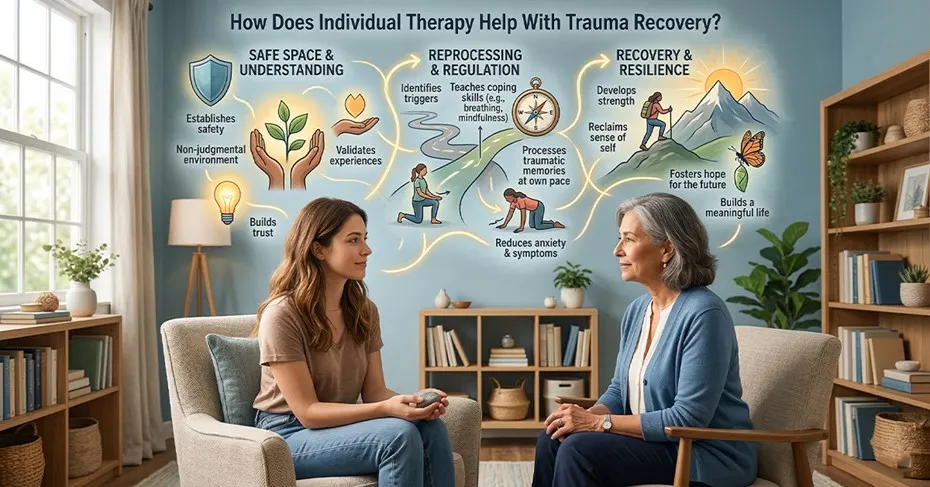
Trauma has a sneaky way of sticking around long after the event is over. It creeps into your sleep, your relationships, and your everyday mood. A lot of people feel like they are stuck in a loop with no way out. But here is the good news: help is closer than you think. If you have been searching for individual counseling near you, you are already on the right track. One-on-one therapy gives you the tools, the space, and the support to finally move forward.
What Is Individual Therapy for Trauma?
Simply put, individual trauma therapy is a private, one-on-one session with a licensed therapist. Unlike group settings, the spotlight is entirely on you. There is no crowd, no pressure, and no judgment. Just you and someone who genuinely wants to help.
Think of it like having a trusted guide by your side. Your therapist gets to know your story from the ground up. From there, they help you make sense of your feelings and figure out how to handle them. That kind of personal attention is hard to find anywhere else.
How Does Trauma Affect the Brain and Body?
Here is the thing about trauma: it does not just live in your memories. It actually changes the way your brain handles stress and emotions. Your brain gets stuck in “fight or flight” mode. Even when you are totally safe, it keeps sounding the alarm.
As a result, everyday situations can feel overwhelming. You might jump at small sounds, zone out during conversations, or feel like you cannot trust anyone. That is not you being dramatic. That is just what trauma does to the brain.
What Are the Most Common Trauma Symptoms Therapy Can Help With?
Trauma shows up differently for everyone, but there are some telltale signs to watch for. These include:
- Intrusive thoughts or flashbacks that pull you back to painful moments
- Persistent anxiety or fear, even when everything around you is fine
- Sleep problems and nightmares that leave you exhausted
- Emotional numbness or detachment from the people you care about
- Hypervigilance, which basically means being on edge 24/7
Left untreated, these symptoms can take a real toll on your daily life. The good news, though, is that therapy directly targets every single one of them.
What Therapy Methods Are Used in Trauma Recovery?
Does Cognitive Behavioral Therapy (CBT) Help With Trauma?
Absolutely, yes. CBT is like a mental reset button for negative thinking. It helps you spot the thought patterns that trauma created. Then, step by step, it teaches you how to replace them with healthier ones.
For instance, imagine someone who refuses to drive after a car accident. CBT helps them slowly face that fear instead of running from it. Over time, the fear starts to lose its grip.
What Is EMDR and How Does It Work?
EMDR might sound a little out there, but it is actually backed by a ton of research. It stands for Eye Movement Desensitization and Reprocessing. During a session, your therapist guides your eye movements while you focus on a painful memory. This process helps your brain file that memory away in a healthier way.
In other words, it takes the sting out of the memory. Many people find EMDR helpful when they struggle to talk about what happened. It works on a deeper level, often faster than traditional therapy.
How Do Mindfulness and Relaxation Techniques Help?
Mindfulness is all about staying grounded in the present moment. Instead of spiraling into “what ifs,” you learn to notice what is happening right now. As a result, anxiety loses some of its power over you.
On top of that, simple breathing exercises and grounding techniques can calm your body when panic sets in. These are not just therapy tools. They are skills you carry with you everywhere you go.
What Is Narrative Therapy in Trauma Treatment?
Narrative therapy is about changing the story you tell yourself. Trauma can make you feel like what happened defines who you are. This approach gently challenges that idea. Instead of seeing yourself as a victim, you start to see yourself as a survivor who is still writing their story.
For people carrying shame or self-blame, this shift can be incredibly freeing. It hands the pen back to you.
What Are the Real Benefits of One-on-One Trauma Therapy?
So, why does individual therapy stand out from the crowd? Here is a breakdown:
- It is completely private. You can say what you actually feel without any fear of judgment. That kind of safety makes all the difference.
- It is built around you. Your therapist does not use a cookie-cutter plan. Everything is tailored to your story, your symptoms, and your goals.
- You walk away with real skills. From managing triggers to calming panic attacks, therapy gives you a solid toolkit for real life.
- You get better at handling big emotions. Over time, those overwhelming feelings start to feel more manageable. You stop being blindsided by them.
- You get your sense of control back. Trauma can make you feel powerless. Therapy flips the script and puts you back in the driver’s seat.
How Long Does Individual Trauma Therapy Take?
Honestly, there is no one-size-fits-all answer here. Some people start feeling better within a few months. Others need longer-term support, especially if the trauma ran deep or lasted a long time.
Either way, your therapist checks in with you regularly and adjusts the plan as you grow. The bottom line is this — healing is not a race. Progress is progress, no matter how slow it feels.
FAQs
Q1: Can individual therapy help with anxiety even without a PTSD diagnosis?
Yes, for sure. You do not need a PTSD label to benefit from trauma therapy. If past experiences are messing with your daily life, therapy can still help you work through them and feel better.
Q2: Will I have to talk about my trauma in detail during sessions?
Not at all. Your therapist follows your lead and never pushes you to share more than you are comfortable with. Healing is the goal, not reliving every hard moment.
Q3: Is individual therapy better than group therapy for trauma?
Both have their place. Individual therapy gives you focused, private attention. Group therapy connects you with people who get it. Many folks find that both work great together at different points in their healing.
Q4: Can teenagers benefit from individual trauma therapy?
Absolutely. Teens actually respond really well to one-on-one therapy. It gives them a safe space to sort through their emotions without feeling watched or judged by peers.
Q5: How do I know if individual therapy is right for me?
If trauma is messing with your sleep, your relationships, or your daily mood, it is worth checking out. A quick conversation with a therapist can help you figure out if it is the right fit for you.
Ready to Start Healing? Take the First Step Today.
We know reaching out can feel scary, especially when trauma has you feeling alone or like nobody truly gets it. But here is the truth: you do not have to white-knuckle your way through this. At Healing Quest Counseling, we are in your corner. Our therapists are warm, experienced, and genuinely invested in your recovery.
Whether you are dealing with PTSD, anxiety, or the long shadow of past trauma, we are here to walk this road with you. If you are looking for individual counseling in Collingswood, reach out to us today. Head over to healingquestcv.com/ and take that first step.