
What Is Family Counseling and Who Can Benefit From It?
Every family goes through tough times. A bad argument that will not blow over. A kid acting out at school. A loss that hits everyone differently. When things get messy at home, it can feel like nobody is on the same team anymore. That is where family counseling near you can make a real difference. It gives families a safe place to sort through the chaos, rebuild trust, and actually start working together again. Let us walk you through what it is, how it works, and why so many families swear by it.
What Exactly Is Family Counseling?
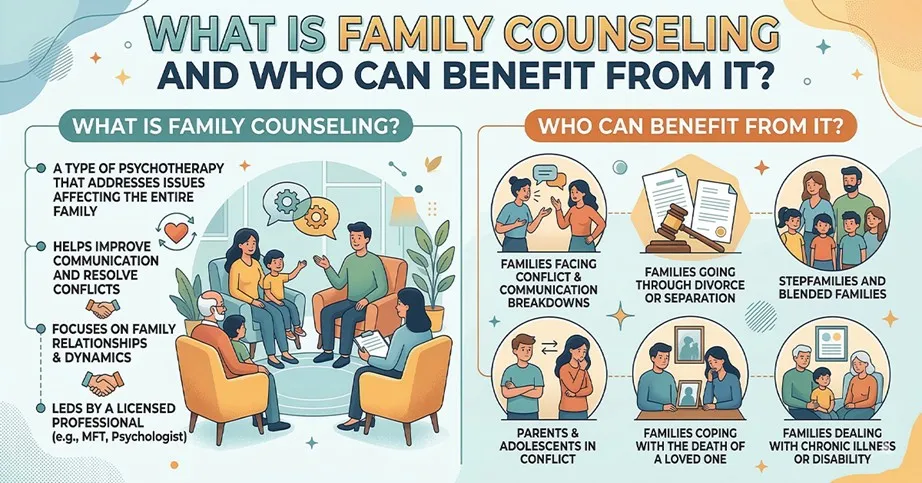
Family counseling is a type of therapy where family members meet together with a licensed therapist. The goal is simple: figure out what is causing tension at home and learn better ways to deal with it. It is not about pointing fingers or assigning blame. It is about understanding each other and finding a way forward as a unit.
Here is the thing most people do not realize: family does not have to mean blood relatives. Counseling works for all kinds of households, including blended families, single-parent homes, or any group of people who live under the same roof and care about each other. If you share a home and a life, family counseling can help.
Who Can Benefit From Family Counseling?
Short answer: pretty much any family. You do not need to be in full-blown crisis mode to benefit. In fact, a lot of families start counseling just to get ahead of problems before they spin out of control. Still, there are some common situations where it really shines.
Families Dealing With Ongoing Conflict
Constant bickering, yelling matches that go nowhere, or one person always shutting down during tough conversations: sound familiar? These patterns do not fix themselves over time. If anything, they get worse. Counseling helps break the cycle by teaching everyone how to talk without it turning into a blowup.
For example, a therapist might help a teenager and a parent understand why they keep butting heads. Sometimes it comes down to feeling unheard. Once both sides feel listened to, the whole dynamic can shift pretty quickly.
Families Going Through a Major Life Change
Big changes shake things up, even when they are positive. A new baby, a divorce, a move to a new city, a serious illness, or the loss of a loved one: all of these can knock a family off balance. Everyone processes change differently, and that can lead to a lot of friction at home.
Counseling helps the whole family get on the same page. Instead of everyone retreating into their own corner, therapy gives people a space to actually talk through what they are feeling. As a result, families come out of hard times closer, not more divided.
Parents and Kids Who Cannot Connect
Parenting is hard. Kids, especially teenagers, can be tough to reach. When communication between a parent and child completely breaks down, it can feel like they are living in two totally different worlds. Counseling bridges that gap.
A therapist acts as a neutral person in the room. They help both sides feel safe enough to open up. Over time, that leads to real conversations instead of just more arguments or awkward silence.
Families Affected by Mental Health or Substance Use
When one person in the family is struggling with mental health or a substance use disorder, it affects everyone. Family members often do not know how to help without accidentally making things worse. Counseling gives the whole family tools to navigate that together.
It also helps prevent burnout in the people doing the caregiving. Therapy teaches boundaries, healthy communication, and realistic expectations, which makes the whole household more stable for everyone involved.
What Are the Real Benefits of Family Counseling?
Beyond just talking things through, family counseling delivers some concrete, lasting benefits. Here is what most families walk away with:
- Better communication: Everyone learns to express themselves clearly and actually listen to each other.
- Healthier boundaries: Family members learn where one person ends, and another begins, which reduces a ton of everyday friction.
- Stronger trust: Open, honest conversations in a safe setting slowly rebuild the trust that conflict chips away.
- Smarter conflict resolution: Instead of blowups or silent treatments, families learn to tackle problems calmly and constructively.
- Better coping skills: Each person gets tools to handle stress, grief, anxiety, or anger more healthily.
- A clearer family dynamic: Roles and responsibilities become clearer, which reduces confusion and resentment.
These are not just therapy-room skills. They carry over into real life, making everyday interactions at home noticeably smoother.
What Actually Happens in a Family Counseling Session?
A lot of people picture family counseling as everyone sitting in a circle while a therapist asks, “How does that make you feel?” It is actually a lot more structured and practical than that.
In the first session, the therapist gets to know your family. They ask what brought you in, how your family tends to communicate, and what you are hoping to change. From there, they start mapping out a plan tailored to your specific situation. No two families get the same cookie-cutter approach.
Sessions might involve the full family, or sometimes just a few members at a time, depending on what needs to be worked on. Most families see real progress within just a handful of sessions, though longer-term support is always an option if needed.
Is Family Counseling in Newfield Worth It for Minor Issues?
Yes, without a doubt. One of the biggest myths about therapy is that you have to be in crisis before it is worth trying. But waiting until things hit rock bottom makes the healing process a lot harder. Think of it like going to the dentist: regular check-ups prevent the big problems from ever showing up.
Families who use family counseling in Newfield for smaller issues, like poor communication habits or tension around chores and responsibilities, often find that those “minor” things were quietly building into something much bigger. Catching them early makes all the difference.
FAQs
Q1) How do I know if my family needs counseling?
If your household has frequent arguments, communication breakdowns, or a big life change nobody is handling well, counseling can help. You do not have to wait for a full-blown crisis to reach out.
Q2) Does everyone in the family have to attend every session?
Not necessarily. Some sessions involve the whole family, while others may focus on just a couple of members. Your therapist will figure out the best setup based on what your family needs.
Q3) How long does family counseling usually last?
It varies. Some families see solid results in just 6 to 10 sessions. Others benefit from longer support. Either way, your therapist will check in on progress and adjust the timeline as you go.
Q4) Can family counseling help after a divorce?
Absolutely. Counseling helps co-parents communicate better and gives kids a safe space to process the change. It takes the edge off a really tough transition for everyone involved.
Q5) Is family counseling the same as individual therapy?
Not quite. Individual therapy focuses on one person. Family counseling looks at the group dynamic and how everyone interacts. Both are valuable, and they often work well together.
Ready to Bring Your Family Closer Together? We Are Here for You.
We know reaching out for help is not always easy, especially when it involves the whole family. But taking that step is one of the best things you can do for the people you love most. At Healing Quest Counseling, our therapists are warm, experienced, and genuinely care about helping your family find its way back to each other.
If you are searching for family counseling near you, we are ready to help. Visit healingquestcv.com today to explore our services and book your first session. Your family has what it takes to get through this, and we would love to help you prove it.